
The Shinkansen
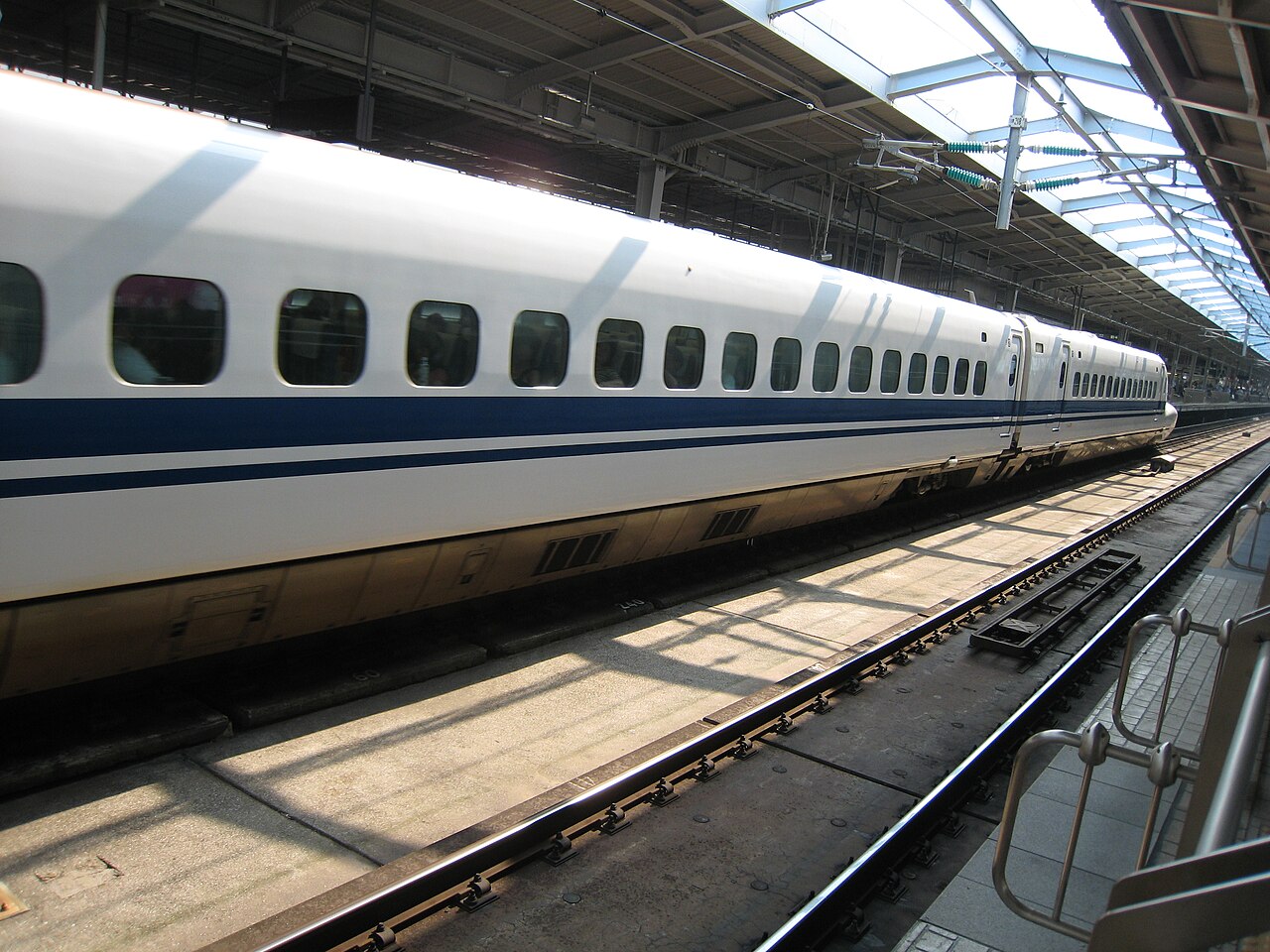
Japan's pioneering high-speed rail network, the Shinkansen.

Grendelkhan · CC BY-SA 4.0
The Shinkansen, colloquially known in English as the bullet train, is a network of high-speed railway lines in Japan.
- Total passengers on Tōkaidō Shinkansen s
- Over 6.5 billion
Lore & Background
After the war, the conventional Tōkaidō Main Line reached full capacity by the mid-1950s, prompting the Japanese National Railways (JNR) to revisit the project.
Reader's Guide
The Shinkansen network represents a transformative achievement in transportation, enabling same-day travel between Tokyo and Osaka and serving as a model for high-speed rail worldwide. The network has expanded to include lines on Honshu, Kyushu, and Hokkaido, with an extension to Sapporo under construction. Japan's challenging geography—earthquakes, soft ground, mountainous terrain, heavy snowfall, and urban spatial constraints—required innovative engineering, such as elongated streamlined nose profiles to mitigate tunnel boom noise. The Shinkansen's success demonstrated that high-speed rail could compete with air travel, reshaping travel patterns and economic connectivity.
Did You Know?
- The Tōkaidō Shinkansen carries up to 16 trains per hour in each direction during peak periods, with a minimum headway of three minutes.
A Category Apart in Japan's Train Taxonomy
The Shinkansen, widely recognized by their English nickname "bullet trains," occupy a position of distinct separation within the formal catalog of named passenger trains in Japan. Rather than being folded into the general daytime or nighttime service categories that organize the rest of the country's rail offerings, the Shinkansen receive their own dedicated heading, listed before the broader daytime and night train sections. This structural placement in the reference material signals that they are treated as a class unto themselves, not merely another tier in a hierarchy of express and rapid services. The very act of giving them a standalone entry—distinct from the Limited express, Express, and Rapid designations that populate the rest of the list—underscores how the Shinkansen are understood to operate on a different plane from conventional named trains. They are not simply the fastest option within an existing framework; they constitute their own framework, a recognition embedded in how Japan's rail nomenclature is organized and presented to the public.
The Tiered Ladder of Named Services
Japan's system of named passenger trains is organized through a clear hierarchy of service levels, and the Shinkansen sit at the apex of this taxonomy. Below the bullet trains, the catalog branches into two major operational periods—daytime and night—each subdivided into three tiers: Limited express, Express, and Rapid. The daytime section even carries a note that its Limited express listing is only partial, hinting at the sheer volume of named services that populate these lower tiers. The Express and Rapid categories appear under both the daytime and nighttime headings, suggesting a consistent three-level structure regardless of when a train runs. What makes the Shinkansen's position remarkable is that they do not appear within any of these tiers. They are not a "Limited express" or an "Express" or a "Rapid" service; they exist outside the ladder entirely, a fact that the very structure of the listing makes unmistakable.
Beyond the Day-and-Night Divide
The organizational logic of Japan's named passenger train system is, for the most part, built around a simple binary: daytime services and nighttime services. Each of these two periods carries its own set of subcategories—Limited express, Express, and Rapid—creating a symmetrical grid that maps the country's conventional rail offerings across the hours of operation. The Shinkansen, however, are listed before this day/night split is even introduced, standing as a standalone entry that does not belong to either column. This placement suggests that the bullet trains are not conceived of as a "daytime" or "nighttime" service in the same way as the trains that follow them in the listing. They are not a Rapid that happens to run at night or a Limited express that operates during the day; they are a separate category that the day/night framework simply does not apply to. The structure of the reference material thus reveals a fundamental conceptual distinction: the Shinkansen exist in a category that the conventional time-based and speed-based classifications of Japanese rail do not encompass.
One Thread in Japan's Rail Tapestry
The Shinkansen do not exist in isolation within the broader landscape of Japanese rail transport. The reference material that catalogs them explicitly connects their entry to the wider subject of rail transport in Japan, positioning the bullet trains as one named category within a much larger ecosystem of passenger services. Around them, the listing reveals a rich taxonomy of daytime and nighttime trains spanning Limited express, Express, and Rapid designations—a network of named services that collectively form the connective tissue of the country's rail system. The fact that the Shinkansen are given their own heading within this broader catalog, rather than being subsumed under any of the existing service tiers, signals that they are understood as a distinct thread in the tapestry of Japanese rail. They are one named category among many, yet one that the structure of the listing elevates above the rest, a recognition of their singular place in a system that otherwise organizes its trains by speed tier and time of day.
Why It Matters (Editorial)
The Shinkansen represents a triumph of postwar Japanese engineering and resilience, transforming travel between major cities into a safe, punctual, and remarkably efficient experience. Its enduring significance is underscored by the Tōkaidō Shinkansen alone carrying over 6.5 billion passengers, proving that high-speed rail can handle immense demand while maintaining headways as tight as three minutes during peak hours.
Gallery
More in Legendary Trains 1-20
Spotted an error? Know more?
This is a living reference — every entry is fact-audited, and reader corrections feed straight into our audit queue. Suggest an edit · See this site's audit record