
Maglev trains
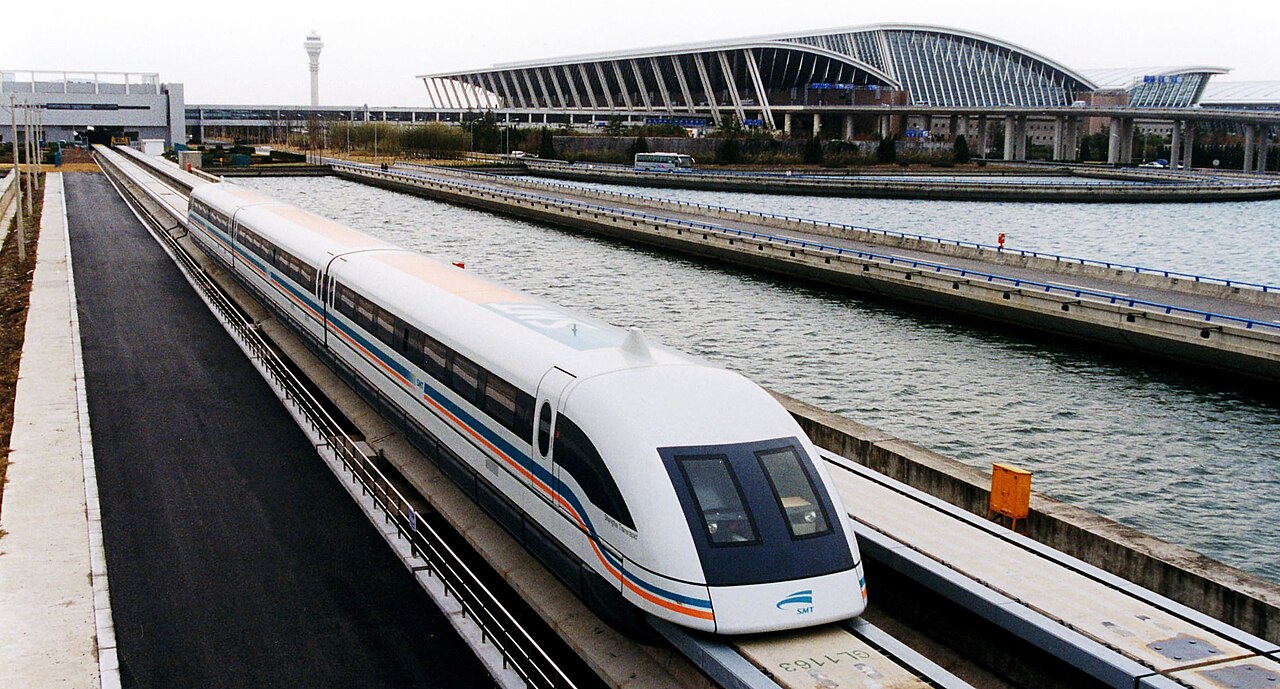
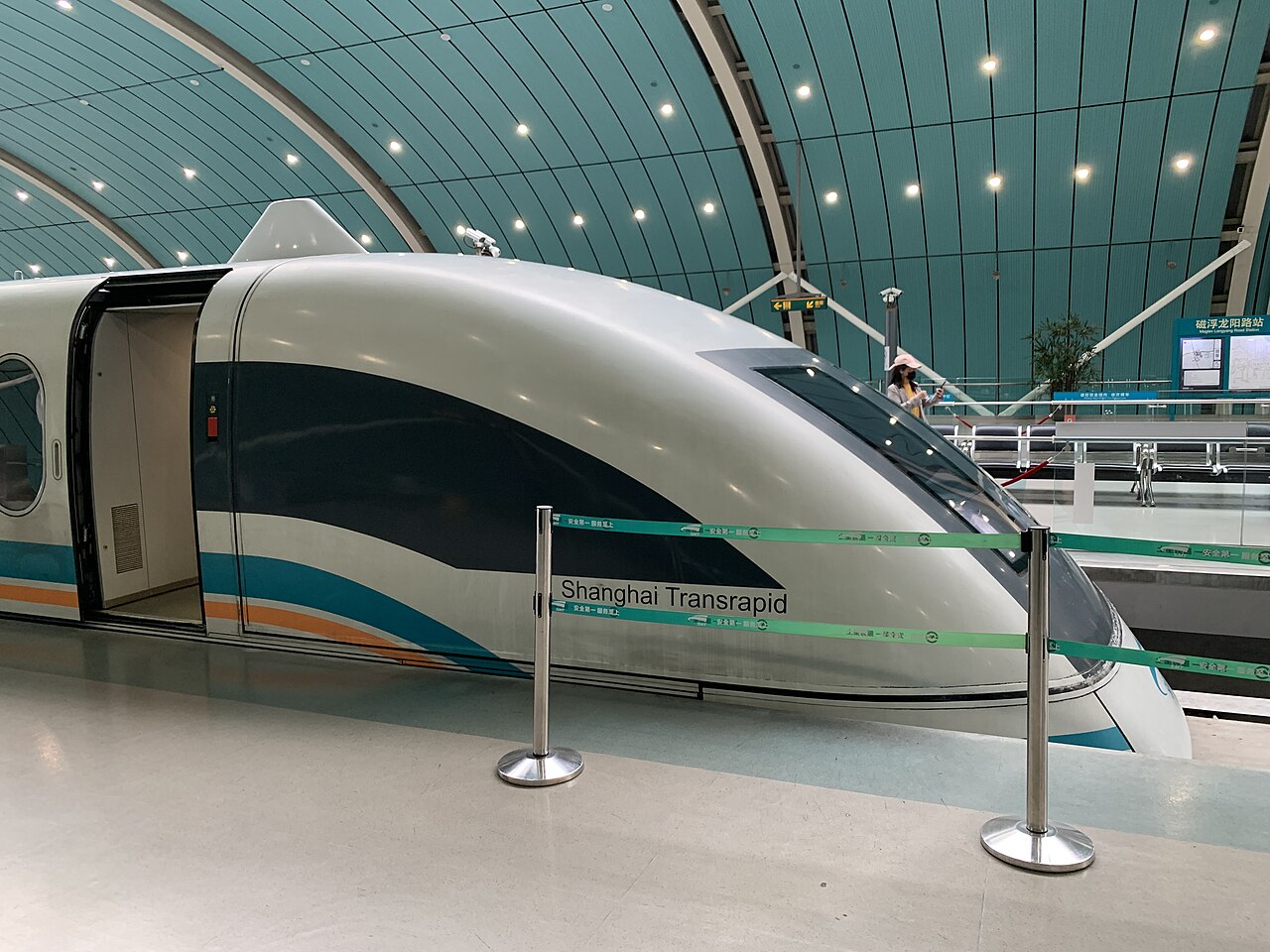
Magnetically levitated trains achieving high speeds without wheels.

Chainwit. · CC BY 4.0
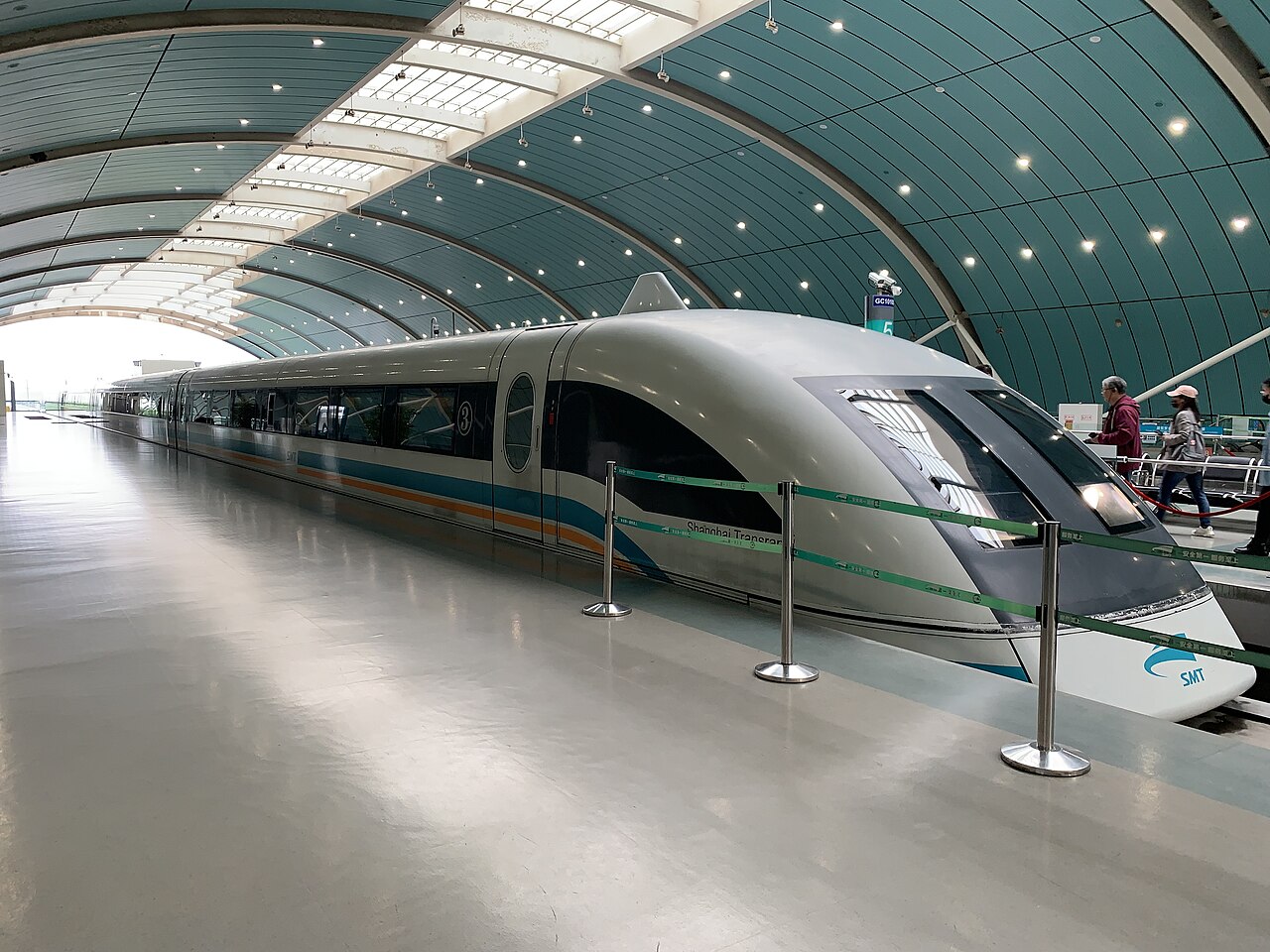
Maglev (derived from magnetic levitation) is a system of rail transport whose rolling stock is levitated by magnets rather than rolled on wheels. Compared to conventional railways, maglev trains can have higher top speeds, superior acceleration and deceleration, lower maintenance costs, improved gradient handling, and lower noise. However, they are more expensive to build, cannot use existing infrastructure, and use more energy at high speeds.
- Number of operational systems
- Six (four in China, one in Japan, one in South Korea)
Lore & Background
Development of maglev technology began in the late 1940s when British electrical engineer Eric Laithwaite developed the first full-size working model of the linear induction motor. Linear motors became common in advanced transportation systems in the 1960s and 1970s. Laithwaite later discovered the magnetic river arrangement, allowing a single linear motor to produce both lift and forward thrust. Early patents for magnetic levitation and linear motor propulsion date back to the early 20th century.
Reader's Guide
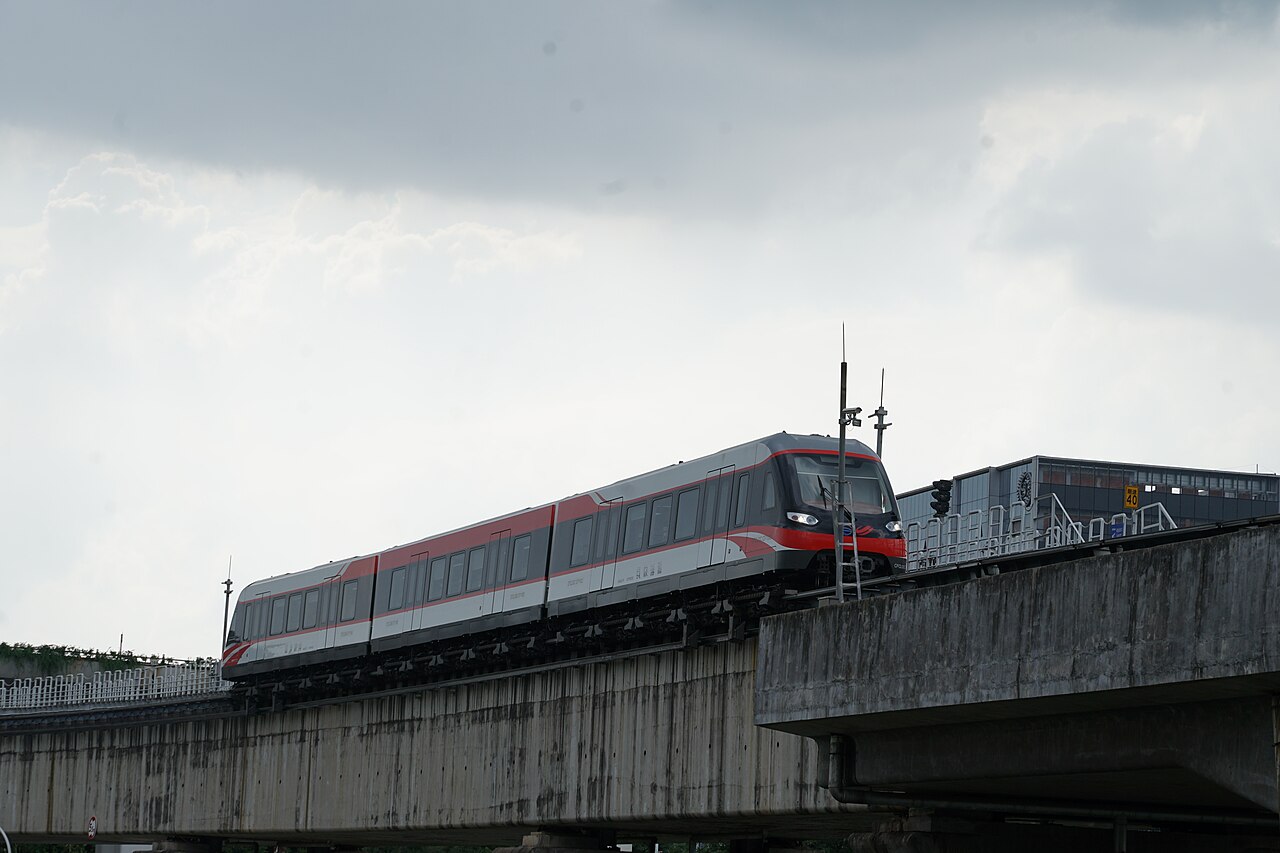
Maglev trains represent a significant technological departure from conventional rail, using magnetic levitation to eliminate wheel-on-rail contact. This allows higher speeds, superior acceleration and deceleration, lower maintenance costs, improved gradient handling, and lower noise. However, they are more expensive to build, cannot use existing infrastructure, and consume more energy at high speeds. The power needed for levitation is typically not a large percentage of overall energy consumption; overcoming drag takes the most energy, leading to proposals for vactrain technology. Despite over a century of research and development, only six operational maglev trains exist today: four in China, one in Japan, and one in South Korea. Two inter-city maglev lines are under construction: the Chūō Shinkansen in Japan and a line between Changsha and Liuyang in China. The legacy of maglev includes setting speed records and demonstrating the feasibility of high-speed ground transport without wheels, though widespread adoption remains limited by high construction costs and infrastructure incompatibility.
Floating Without Touching
The defining trait of a maglev is that it never touches its track. Rather than rolling on steel wheels along steel rails like the overwhelming majority of trains, a maglev uses magnetic levitation to hover above a guideway. This places it squarely among the specialized trains that operate in significantly different ways from conventional two-rail systems. Where monorails run on a single rail and funiculars are engineered to climb steep slopes, the maglev takes a fundamentally different approach: eliminating physical contact between vehicle and track altogether. By design, it sidesteps the very friction that makes conventional steel-on-steel rolling so efficient. This distinction sets maglevs apart from every other form of rail transport in the broader taxonomy, where trains are typically classified by whether they carry passengers or freight, by weight, by speed, by distance, or by the form of track they use. The maglev belongs to none of those conventional categories in the usual sense.
A Decades-Long Experiment
High-speed maglevs have been under development since the 1970s, meaning the project has spanned more than half a century of continuous work. Despite that long timeline, they remain classified as experimental trains, a label that underscores how far they sit from the everyday reliability of conventional rail. The 1970s were also the decade when governments, environmentalists, and train advocates began championing greater use of rail transport because of its superior fuel efficiency and lower greenhouse gas emissions relative to other land-based modes. In that same window, high-speed rail—first built in the 1960s—was proving competitive with cars and planes for short- to medium-distance travel. The maglev project emerged against this backdrop of renewed faith in rail, yet it has yet to achieve the widespread adoption that conventional high-speed lines have enjoyed. The experimental designation persists even after many decades of refinement.
Outpacing the Conventional
The most striking claim attached to high-speed maglevs is their speed. They can reach velocities higher than even the fastest conventional trains, a threshold that no amount of improvement to steel wheels on steel rails has matched. Conventional trains owe much of their efficiency to the low friction of steel wheels rolling on steel tracks, a principle that has served rail transport well since the earliest wagonways. Yet the maglev, by floating above its guideway through magnetic levitation, sidesteps that physical contact entirely and pushes past the speed ceiling conventional engineering has established. In the broader taxonomy of trains, speed is one of the key axes along which they are sorted, alongside weight, distance, and track type. The maglev occupies the extreme upper end of the speed category, surpassing even the high-speed rail systems that first appeared in the 1960s and have since proven competitive with automobiles and aircraft for short- to medium-distance journeys.
Where Maglev Sits in the Railway Story
To understand the maglev, one must appreciate the long arc of rail transport. Trains evolved from wheeled wagons running on stone wagonways, the earliest of which date to Babylon around 2,200 BCE. From the 1500s, wagonways hauled material from mines; by the 1790s, stronger iron rails appeared. Steam gave way to diesel and electric power from the 1920s onward, and the rise of cars, trucks, highways, and faster airplanes caused many rail lines to be abandoned. Yet since the 1970s, a renewed push for fuel-efficient, low-emission land transport has kept rail relevant. In that lineage, the maglev represents the latest experimental frontier: a train that floats rather than rolls, developed since the 1970s, reaching speeds beyond anything conventional rail has achieved.
Common Misconceptions (Editorial)
Some people think maglev trains use wheels like conventional trains, but they are actually levitated by magnets. Others assume maglev systems are widespread globally, but there are only six operational systems, located in China, Japan, and South Korea.
Why It Matters (Editorial)
Maglev trains represent a bold rethinking of rail transport, trading established wheel-on-rail technology for magnetic levitation to achieve higher speeds and lower maintenance. Their enduring fascination lies in the pursuit of frictionless travel, a goal that continues to drive innovation despite the high costs and infrastructure challenges that keep them rare.
Gallery

Frequently Asked Questions
What is a Maglev train?
A maglev train is a rail vehicle that floats above its track using magnetic forces rather than rolling on wheels, eliminating direct contact between the train and the rail. This design lets it reach much higher top speeds, accelerate and brake more sharply, and run quieter than conventional trains.
What are Maglev trains's powers and trade-offs?
Maglevs can handle steep gradients effortlessly, need less routine maintenance thanks to the absence of wheel-on-rail friction, and achieve speeds no wheeled train can match. Their drawbacks are higher construction costs, the inability to share existing rail infrastructure, and greater energy draw at top speed.
More in Legendary Trains 1-20
Spotted an error? Know more?
This is a living reference — every entry is fact-audited, and reader corrections feed straight into our audit queue. Suggest an edit · See this site's audit record