
The Glacier Express
The slowest express train in the world.

JoachimKohler-HB · CC BY-SA 4.0
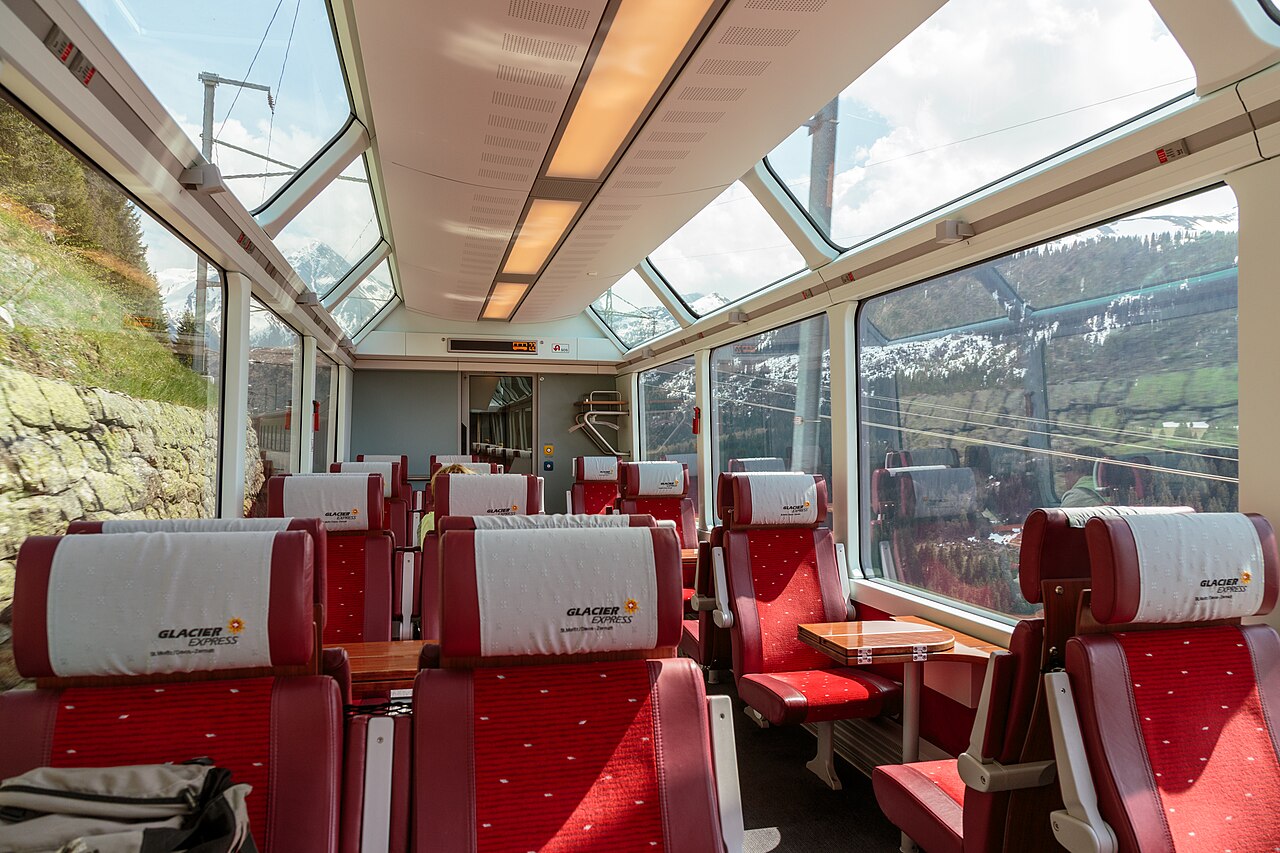
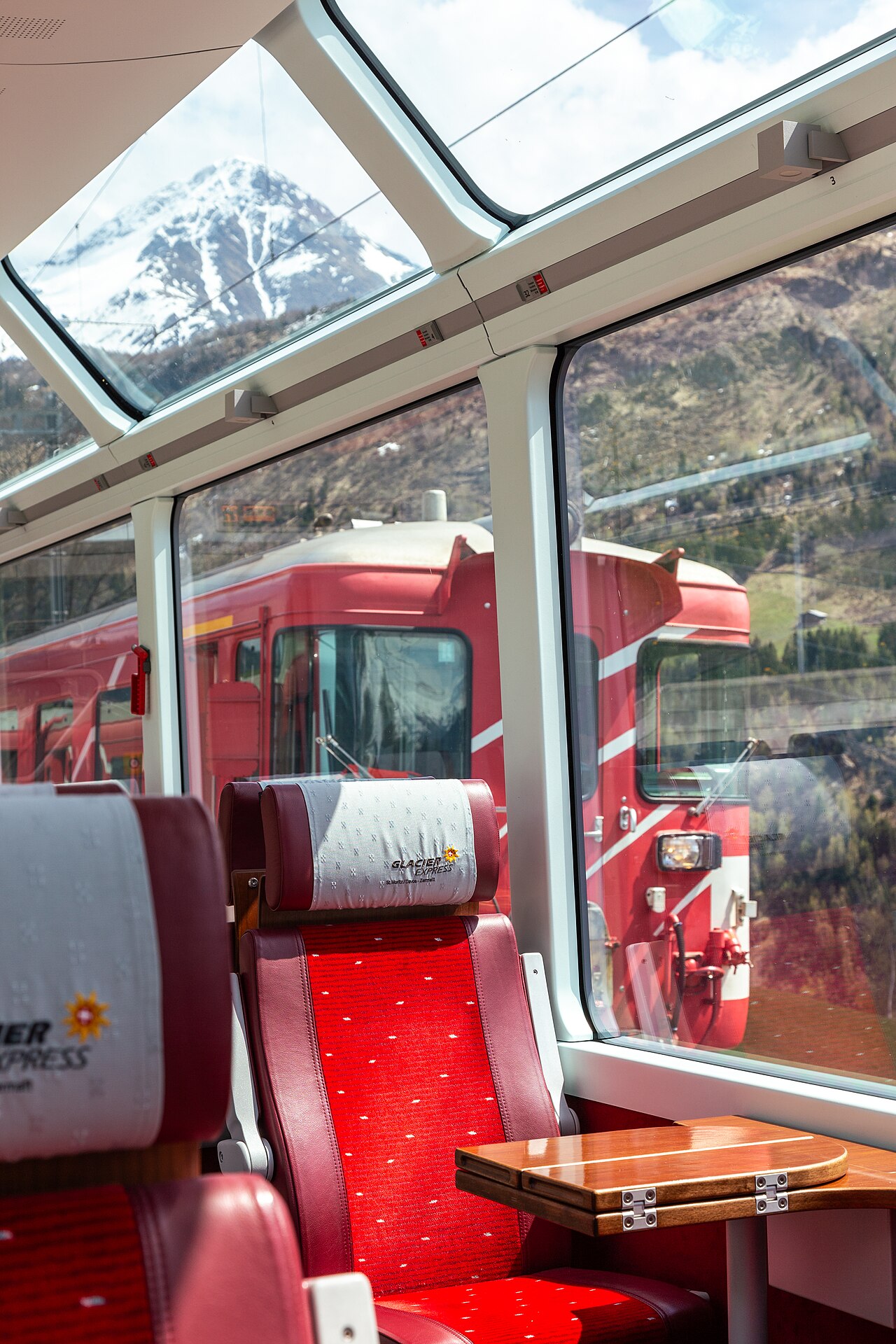
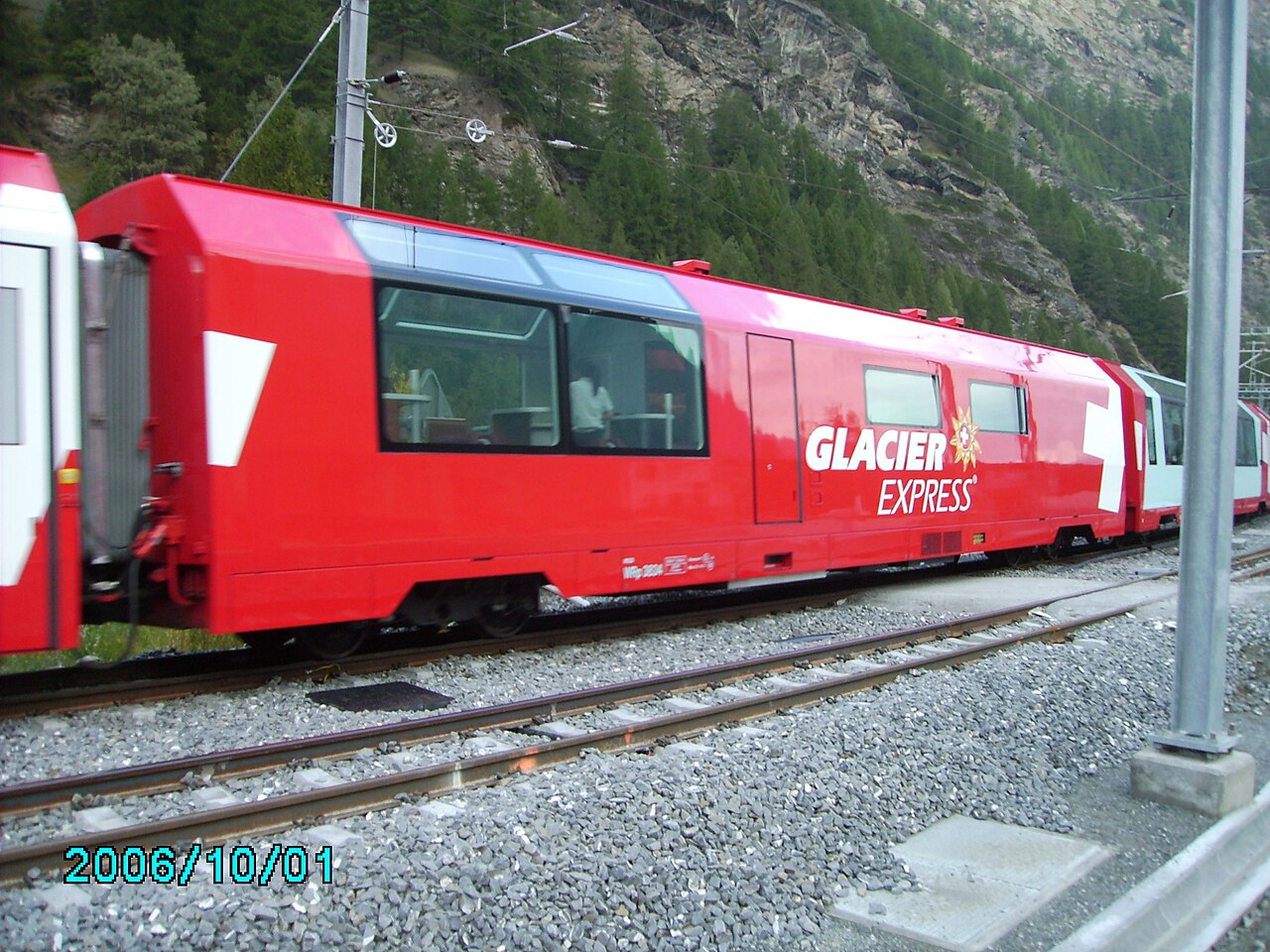
The Glacier Express is a named train in Switzerland, running as a Panorama Express (PE), which directly connects the railway stations of the two major mountain resorts of Zermatt and St. Moritz via Andermatt in the central Swiss Alps. Known as the 'slowest express train in the world', it travels from Matterhorn to Piz Bernina.
- First operated
- 30 June 1930
- Number of tunnels
- 91
- Gauge
- Metre gauge (narrow gauge)
Lore & Background
The first Glacier Express started on 30 June 1930 at 07:30 in Zermatt, initially operated by three railway companies: the Visp-Zermatt-Bahn (VZ), the Furka Oberalp Bahn (FO), and the Rhätische Bahn (RhB). The train's name honored the Rhone Glacier, near Gletsch on the Furka Pass. Moritz. The entire line is metre gauge, with 23.9 km (14.9 mi) using rack-and-pinion system.
Reader's Guide
The Glacier Express is significant as a historic tourist train that has connected two major Alpine resorts since 1930, offering a scenic one-seat ride through the Swiss Alps. Its route passes through the UNESCO World Heritage Site 'Rhaetian Railway in the Albula / Bernina Landscapes'. Since 2017, it has been operated by Glacier Express AG, jointly owned by Matterhorn Gotthard Bahn (MGB) and Rhaetian Railway (RhB). It is especially popular with tourists from Germany, Japan, and increasingly India. The train's dining service contracts local businesses for fresh meals due to limited storage space for raw materials.
Did You Know?
- The Glacier Express was first operated on 30 June 1930 at 07:30 from Zermatt.
- The train's name honors the Rhone Glacier, near Gletsch on the Furka Pass.
- The entire line is metre gauge, with 23.9 km using rack-and-pinion system.
Engineering & Construction
The Albula line's 61.67-kilometre route between Thusis and St. Moritz represents a masterclass in early twentieth-century mountain rail engineering. Because the line was conceived as a steam-powered, universally accessible route for both passengers and freight, designers imposed a maximum gradient of just 3.5 percent and generous minimum curve radii to keep speeds reasonable. That constraint, however, forced extraordinary geometric solutions. Outflowing water during its excavation bankrupted the contractor, and sixteen workers lost their lives across the entire project.
Political Context & Rival Proposals
Before the Albula line existed, the south-eastern reaches of Switzerland were largely bypassed by rail. Alpine transit traffic funneled through the Gotthard Railway, making transcontinental lines in Graubünden seem economically unviable. Competing proposals abounded. Davos hotelier Willem Jan Holsboer envisioned a Scaletta Pass tunnel route to St. Moritz and onward to Chiavenna, while Zurich pioneer Adolf Guyer-Zeller championed a standard-gauge Engadine-Orient-Railway threading a twelve-kilometre tunnel under the Albula Alps toward Trieste. Moritz remained a fourteen-hour stagecoach journey from Chur.
UNESCO Heritage & Global Recognition
This recognition elevated a working, single-track metre-gauge line in the canton of Graubünden to the same tier as the world's most celebrated cultural and natural monuments. For the Rhaetian Railway, the inscription transformed a regional engineering achievement into a globally protected heritage asset, ensuring that the line's original alignment, its solidly constructed viaducts, and its screw-thread tunnel sequences would be preserved for future generations as a testament to early twentieth-century rail ambition in one of Europe's most demanding mountain terrains.
The Glacier Express Connection
The Albula line is most widely recognised as the corridor over which the Glacier Express and the Bernina Express travel, two of the Rhaetian Railway's flagship panoramic services. The line's design philosophy—modest 3.5-percent gradients and generous curves—was originally a practical compromise to accommodate the limited power of early steam locomotives and to keep the route viable for freight traffic, yet it is precisely these sweeping, unhurried curves that give the Glacier Express its characteristic gliding rhythm through the Engadine valley. Although the line was conceived as a universal transport artery rather than a scenic attraction, the Glacier Express has since become its most famous passenger, carrying travellers through the same Albula Tunnel that once cost sixteen lives and bankrupted its contractor.
Common Misconceptions (Editorial)
Some people think the Glacier Express is the "world's fastest express train," but it’s actually known as the "slowest express train in the world." Others may believe it connects only one major resort, but in fact it directly links Zermatt and St. Moritz via Andermatt. Additionally, some assume the train was named after a glacier in St. Moritz or Zermatt, but the name honors the Rhone Glacier near Gletsch on the Furka Pass.
Why It Matters (Editorial)
The Glacier Express endures as a masterpiece of alpine engineering and leisurely luxury, turning a mountain crossing into a world-class experience rather than mere transit. Its 91 tunnels and rack-and-pinion sections prove that even the slowest journey can be the most memorable, preserving a golden age of rail travel amid Switzerland’s most dramatic scenery.
Gallery
Frequently Asked Questions
How does The Glacier Express's story end?
There is no final chapter; the service first rolled out on 30 June 1930 and has continued operating between the Matterhorn and Piz Bernina ever since, making it an ongoing legend rather than a concluded tale.
Why is The Glacier Express important?
It was the first dedicated panorama train to stitch together Switzerland's two most iconic mountain destinations in one continuous ride, and its 1930 debut set the template for the country's scenic rail tourism.
More in Legendary Trains 1-20
Spotted an error? Know more?
This is a living reference — every entry is fact-audited, and reader corrections feed straight into our audit queue. Suggest an edit · See this site's audit record